
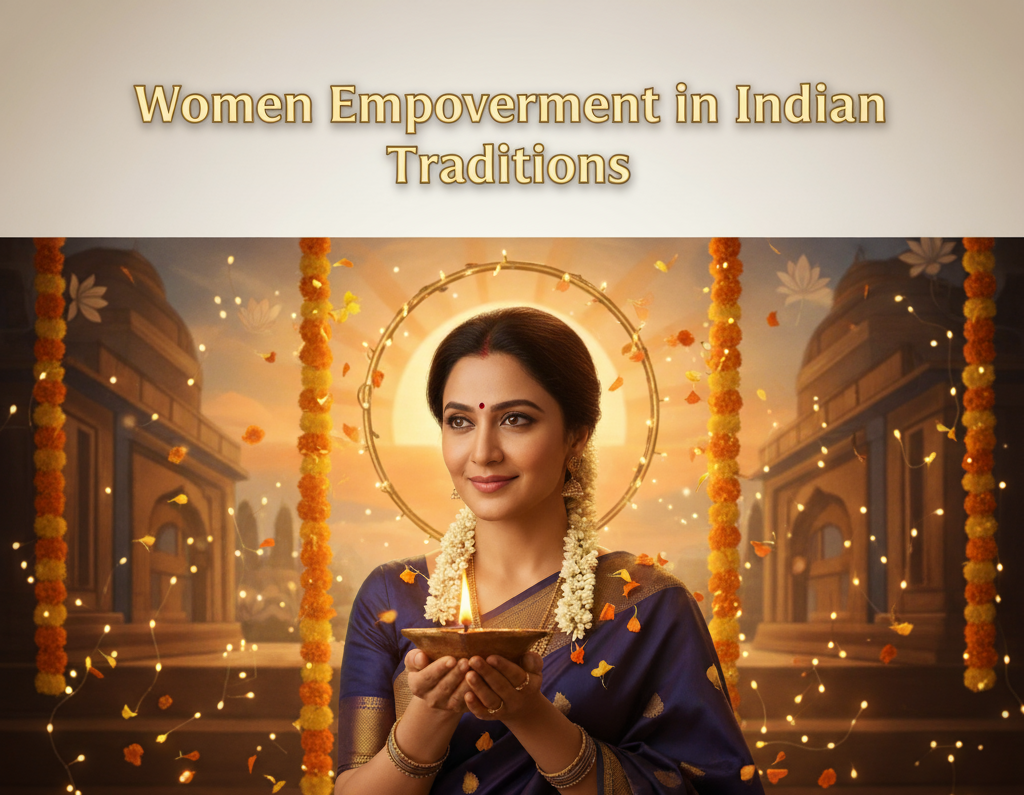
A Thoughtful Reflection on Equality in Our Traditions
Women empowerment in Indian traditions is not just about giving women equal rights — it’s about rethinking age-old customs that often revolve around men. In India, many rituals and vrats (fasts) are designed for the well-being of husbands — like Karva Chauth, Vat Savitri, or Teej. But have you ever noticed there isn’t a single vrat where men fast for their wives’ long lives or happiness?
This imbalance raises an important question — if love and marriage are about equality, why do only women carry the weight of devotion through fasting? Let’s explore seven deep-rooted reasons behind this tradition and how change can bring balance to both faith and relationships.
1. The Question That No One Asks
- Every year, countless women observe vrats with full dedication.
- They pray for their husband’s long life or for a good partner in the future.
- But no ritual exists where men fast for the wellbeing of their wives.
- Society accepts this as normal — without asking, why not both ways?
- A woman’s love is celebrated in her sacrifice, but her needs are often forgotten.
This simple question opens a deeper conversation about women empowerment in Indian traditions — about how devotion and equality can walk hand in hand.
2. The Love That Fasts but Never Rests
- Vrats are often seen as acts of love, but love should mean equality, not expectation.
- When a woman fasts, it’s devotion. When a man does it, it’s rare or even ridiculed.
- This quiet imbalance has been accepted for generations.
We don’t need to reject traditions — we need to evolve them. Our mothers and grandmothers followed these rituals with faith and heart. Now it’s our turn to bring empowerment and balance into these customs.
3. The Roots of the Ritual
- Centuries ago, women had no financial or social independence.
- Their lives were tied to their husbands’ wellbeing.
- Fasting became a way to express loyalty and love.
- But today, women study, work, and lead with strength and confidence.
Spirituality is about love, not control.
True devotion should never be one-sided — and this is where women empowerment in Indian traditions becomes essential.
4. The Modern Reflection
- Today’s generation is redefining these old customs beautifully.
- Many couples now fast together, showing equal respect and affection.
- Some women celebrate the day differently — through self-care, gratitude, or prayer for both partners.
- They see the vrat not as sacrifice, but as a symbol of love and mutual respect.
Empowerment doesn’t mean rejecting rituals — it means redefining them with equality.
5. A Question for Every Couple
- What if men also kept a vrat for their wives?
- What if both prayed for each other’s happiness and long life?
Imagine this:
- Both partners thank each other for love and companionship.
- Both share the prayers and blessings.
- Both understand that real devotion means care, not sacrifice.
Wouldn’t that make the bond even more sacred?
6. Time to Redefine Devotion
- Traditions are beautiful when they grow with time.
- Let’s keep the emotion, but remove the inequality.
Simple steps can create real change:
- Couples can fast together.
- Families can bless both husband and wife equally.
- Parents can teach sons to show care, not just expect it from daughters or daughters in law.
This is true women empowerment in Indian traditions — evolving old beliefs into modern expressions of love and respect.
7. The Final Thought
- Every woman deserves love, care, and blessings — not just as someone’s wife, but as a person with her own dreams and struggles.
- Her wellbeing matters. Her peace matters. Her happiness matters.
So next time you see a woman fasting for her husband, ask:
👉 Who will fast for her?
Maybe it’s time for a new kind of vrat — one where both hearts pray for each other.
Because love is not meant to be one-sided — it’s meant to be shared.
Subscribe to my YouTube channel for videos on Women Empowerment, life experiences and workplace motivation: Suno Zindagi: Life Unmuted
Connect with me on LinkedIn: Suno Zindagi: Life Unmuted