
The Twisha Sharma case is not just another viral news story.
It is a painful reminder of how many women silently suffer after marriage while the world tells them to “adjust.”
Twisha Sharma was educated, talented, independent, and successful. She had dreams, a career, and her own identity. Yet according to reports and allegations, she was emotionally struggling inside her married life.
The most heartbreaking part is that she reportedly told her mother:
“Mujhe yahan se le jao… I am not okay.”
Today, this line is touching millions of people emotionally because many daughters silently say similar things every day.
The Twisha Sharma case is not only about one woman. It is about a mindset that still exists in society.
Here are 7 important lessons every parent and daughter must learn.
1. Marriage Should Never Cost a Woman Her Peace
From childhood, many girls are taught:
- compromise,
- tolerate,
- adjust,
- protect the marriage at any cost.
But very few girls are taught:
“Your mental peace and safety matter too.”
A relationship should never make a woman feel emotionally trapped, constantly insulted, or mentally exhausted.
The Twisha Sharma case reminds us that emotional suffering is also serious suffering.
2. A Daughter Still Needs Her Parents After Marriage
Many parents believe:
““Now she is married. Ab to Beti hui Parayi..
Now she belongs only to her new home.”
But the truth is:
even after marriage, a daughter still needs:
- love,
- emotional support,
- care,
- and reassurance from her parents.
Marriage changes a daughter’s address, not her emotional connection with her family.
A daughter should never feel:
“Now I am alone.”
3. Parents Must Listen to Emotional Warning Signs
Not every daughter directly says:
“I am suffering.”
Sometimes she says:
- “I don’t feel happy.”
- “Please take me home.”
- “I feel tired all the time.”
- “I cannot handle this anymore.”
These are not “small emotional moments.”
These are warning signs.
The Twisha Sharma case teaches parents that emotional pain should never be ignored.
4. Society Must Stop Glorifying Women’s Sacrifice
Women are often praised for:
- staying silent,
- tolerating disrespect,
- sacrificing endlessly,
- and saving relationships no matter how much pain they endure.
But silent suffering is not strength.
A woman deserves:
- respect,
- emotional safety,
- dignity,
- and peace inside her own home.
No woman should feel that enduring pain is her duty.
5. Financial Independence Alone Cannot Protect Women
Many people assume that educated and financially independent women can easily handle everything.
But emotional abuse can affect anyone.
A woman may be:
- successful,
- intelligent,
- professionally strong,
- and admired by society…
…and still feel emotionally broken inside her home.
That is why daughters should also be taught:
- emotional boundaries,
- self-worth,
- legal awareness,
- and the courage to ask for help.
6. Parents Should Never Fear “Log Kya Kahenge”
One of the biggest reasons many daughters continue suffering silently is society’s judgment.
Sometimes parents know their daughter is unhappy, but they avoid interfering because they fear:
“People will talk.”
But society never suffers the loss.
The family does.
A daughter coming back home is not failure.
Losing her forever is.
7. A Strong Daughter Still Needs Emotional Support
Sometimes parents think:
- “Our daughter is strong.”
- “She is independent now.”
- “She can handle everything herself.”
But strength does not mean someone no longer needs love and support.
Even the strongest women break silently sometimes.
A daughter may handle:
- work pressure,
- marriage,
- responsibilities,
- emotional stress,
- and society’s expectations…
But she still needs one safe space where she feels protected emotionally.
And for most daughters, that place is their parents.
The Twisha Sharma case reminds us of one powerful truth:
Independence teaches a daughter how to survive the world.
But parental support gives her the emotional strength to survive painful situations.
A strong daughter still needs a safe place to fall apart sometimes.
Final Thoughts
The Twisha Sharma case should not become just another trending topic people forget after a few days.
It should become a lesson for every family.
Teach daughters:
- self-respect,
- emotional awareness,
- and the courage to speak up.
Teach parents:
- to listen carefully,
- support without judgment,
- and never ignore emotional pain.
Because sometimes the strongest women suffer silently.
Many women silently lose themselves while trying to save relationships. If you have ever felt emotionally drained or broken inside, these 7 Powerful Steps to Heal When You’re Feeling Lost in Life may help you reconnect with yourself.
And sometimes, all they need is someone who truly listens.
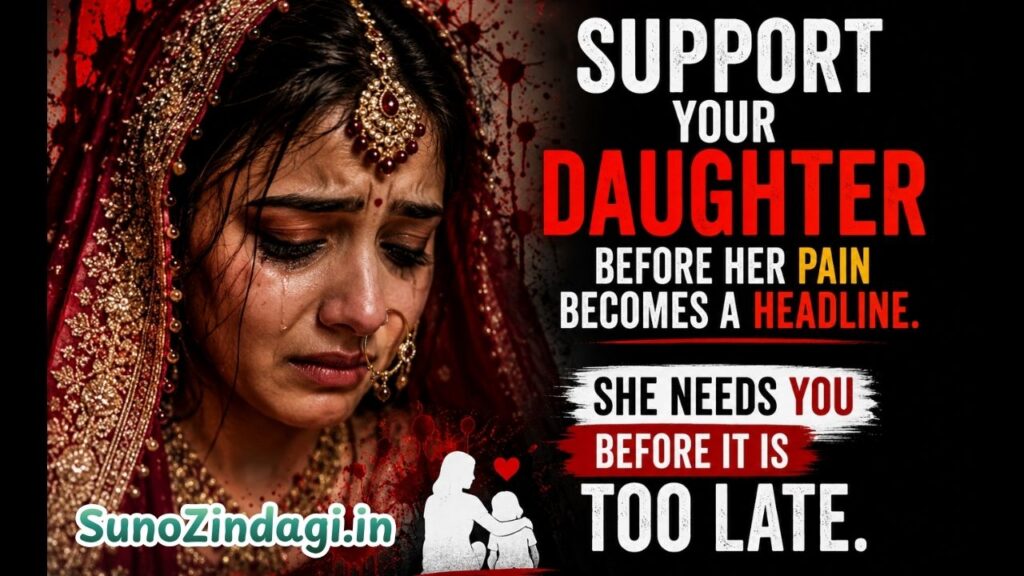
“Support your daughter before her pain becomes a headline.
She needs you before it’s too late.” 💔